
Pelvic Floor Physiotherapy in Delhi
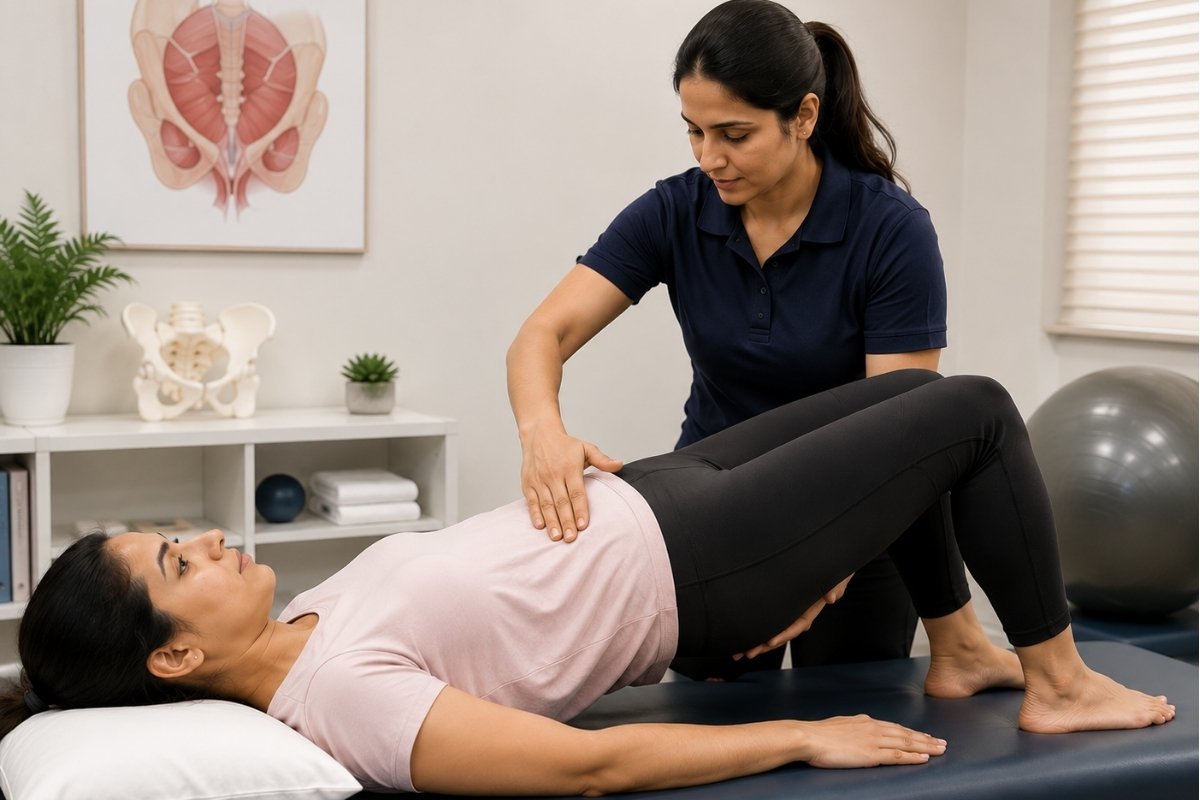
Some of the most effective treatment in urogynaecology involves no surgery at all. Pelvic floor physiotherapy — supervised training of the muscles that support the bladder, bowel and womb — is the recommended first-line treatment for stress incontinence and mild prolapse, and it helps with pelvic pain too. At Sama Hospital’s urogynaecology unit in South Delhi, it is often where we start, not where we end up.
Not the Same as “Do Your Kegels”
Most people who are told to do pelvic floor exercises do them incorrectly, and so get no benefit. Supervised physiotherapy is different: you are shown exactly which muscles to use, checked that you are using them correctly, and given a programme that progresses. That is why it works when unsupervised effort often doesn’t.
What It Helps
- Stress urinary incontinence — leaking on coughing, laughing or exercise
- Mild to moderate prolapse
- Pelvic pain and painful intercourse where muscle tightness is involved
- Recovery after childbirth
First-Line, Not Second-Best
For stress incontinence and mild prolapse, physiotherapy is the recommended first step — and for many women it resolves the problem with no operation at all. Surgery is considered only if a proper course has been given a fair trial and symptoms remain troublesome. It works well, carries very little risk, and costs far less than surgery. Offering it first is simply good medicine.
When the Muscles Are Too Tight
Not every pelvic floor problem is weakness. In some women the muscles are overactive and cannot relax, causing pelvic pain, painful intercourse or difficulty emptying the bladder. Here the physiotherapy is about learning to release the muscles, not strengthen them — which is exactly why an accurate assessment comes first.
What a Programme Involves
After assessment you are given a tailored programme, taught the technique correctly, and reviewed over a course of sessions across several weeks. Results build gradually with consistent practice; most women notice improvement within a few weeks to a couple of months.
Cost in Delhi
What moves the figure: the number of sessions your programme needs. It is a course rather than a one-off, and it is considerably less costly than surgery.
Pelvic floor physiotherapy is typically a course of sessions rather than a one-off. We will explain what a programme involves and its cost after your first assessment, with cashless treatment available for eligible insurance patients where applicable. See our cost estimate page.
Why Choose Sama Hospital
Doctor-owned, NABH-accredited, in South Delhi since 1982, with a dedicated urogynaecology team named on this page. We reach for physiotherapy before surgery wherever it can work — because for many women, it is all they need.
Frequently Asked Questions
What is pelvic floor physiotherapy?
Supervised training of the muscles supporting the bladder, bowel and womb. Done under guidance it is one of the most effective first-line treatments for stress incontinence and mild prolapse, and it also helps where muscles are too tight.
What does it help?
Stress incontinence, mild to moderate prolapse, pelvic pain and painful intercourse involving muscle tightness, and recovery after childbirth. For many it is the recommended first treatment.
Is it better than surgery?
For stress incontinence and mild prolapse it is the recommended first step, and for many women it resolves things without an operation. Surgery is considered only if a fair trial of physiotherapy hasn’t helped.
How long does it take?
A course over weeks, not a single visit. Most women notice improvement within a few weeks to a couple of months. Being taught and supervised makes a real difference.
Can the pelvic floor be too tight rather than too weak?
Yes. In some women the muscles are overactive and cannot relax, causing pain or difficulty emptying. Then physiotherapy is about releasing the muscles, not strengthening them — which is why assessment comes first.

