
Painful Intercourse (Dyspareunia) Treatment in Delhi
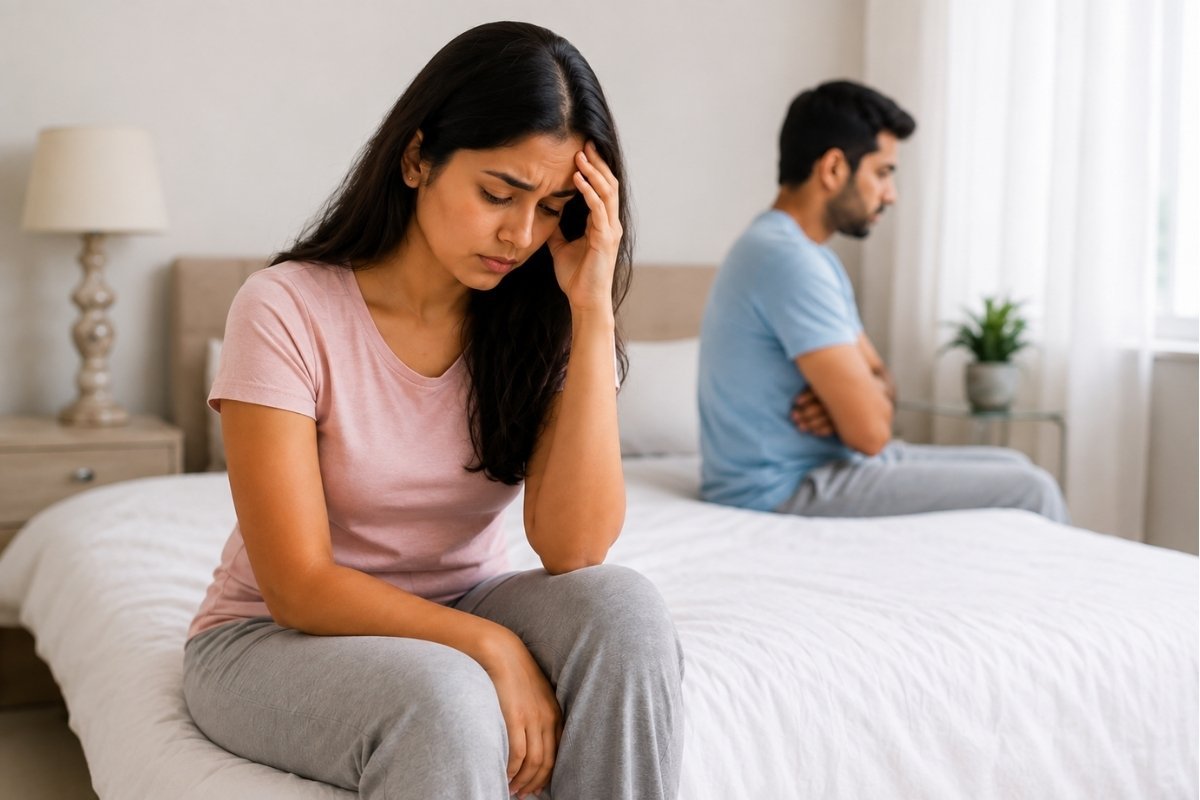
Painful intercourse — the medical term is dyspareunia — is far more common than most women realise, and it is almost always treatable. It is not something to accept, and it is not something to feel awkward about raising. There is usually a physical cause, and finding it is what leads to relief. At Sama Hospital’s urogynaecology unit — a NABH-accredited, doctor-owned hospital in South Delhi, with a female-led team — you can discuss it openly and be assessed sensitively.
You Are Not Alone With This
Many women live with painful sex for years, assuming nothing can be done or feeling unable to bring it up. Neither is true. Once the cause is identified, the treatment is often simple. The hardest step is usually the first conversation — and we make that as comfortable as we can.
Symptoms
- Pain at the vaginal entrance during penetration
- Deeper pelvic pain during intercourse
- Vaginal dryness or a burning sensation
- Involuntary tightening of the pelvic muscles
Common Causes
Understanding where the pain is — at the entrance or deeper — is a large part of the diagnosis. Common causes include:
- Vaginal dryness, especially after the menopause or while breastfeeding, when falling oestrogen thins the tissues
- Infections
- Endometriosis and other conditions causing deep pain
- Scarring after childbirth or surgery
- A prolapse
- Pelvic floor muscles that tighten involuntarily — where pelvic floor physiotherapy often helps
A Sensitive, Unhurried Assessment
A gentle examination is usually part of finding the cause, but it is done at your pace and never rushed. You are always in control of how the consultation proceeds. Being seen by a female-led urogynaecology team makes this easier for many women.
Treatment
Treatment is aimed at the cause and is frequently simple. Dryness after the menopause often responds very well to local oestrogen and lubricants. Infections are treated. Pelvic floor physiotherapy helps where muscle tightness is the problem. Endometriosis or a prolapse is treated on its own terms. Surgery is only relevant for specific structural causes — for most women, it is not needed at all.
Cost of Assessment in Delhi
What moves the figure: the investigations needed and whether any procedure is involved. For most women the answer lies in assessment and non-surgical treatment.
We quote an all-inclusive package where a procedure is needed, confirmed after assessment, with cashless treatment available for eligible insurance patients. See our cost estimate page.
Why Choose Sama Hospital
Doctor-owned, NABH-accredited, in South Delhi since 1982, with a dedicated, female-led urogynaecology team named on this page. We treat painful intercourse as the real, treatable medical problem it is — discussed openly, assessed sensitively, and taken seriously.
Frequently Asked Questions
Is this common? Should I see a doctor?
Far more common than most women realise, and almost always treatable once the cause is found. It is worth seeing a urogynaecologist rather than living with it.
What causes it?
Vaginal dryness (often post-menopause or while breastfeeding), infections, endometriosis, scarring after childbirth or surgery, a prolapse, or pelvic floor muscles that tighten involuntarily. Often more than one factor.
Will I need an examination?
A gentle examination is usually part of finding the cause, done sensitively and at your pace. You are always in control of how the consultation proceeds.
How is it treated?
By cause — local oestrogen and lubricants for dryness, treating infections, pelvic floor physiotherapy for muscle tightness, and treating endometriosis or prolapse. Surgery only for specific structural causes.
Is the cause ever psychological?
Pain and anxiety feed each other, and involuntary muscle tightening is a genuine physical response. A good assessment takes both the physical and emotional side seriously and does not dismiss the pain.

