
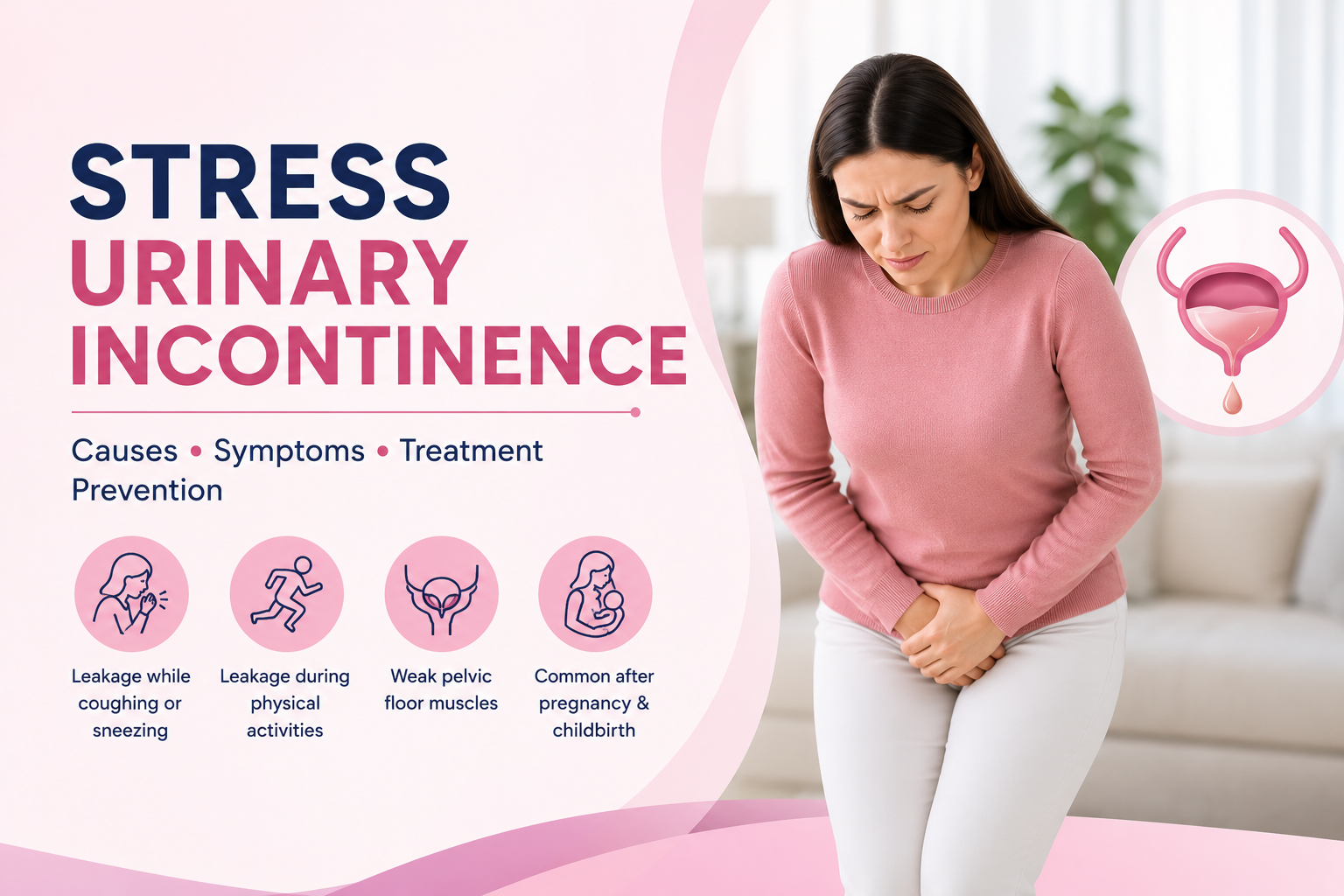
Stress urinary incontinence (SUI) is one of the most common yet underreported pelvic health conditions affecting women. Many women silently experience urine leakage while coughing, sneezing, laughing, exercising, or lifting heavy objects. Although common, this condition is not a normal part of aging and should not be ignored.
At Sama Hospital, women receive specialized diagnosis and treatment for stress urinary incontinence under the expert care of Dr. Karishma Thariani. Early treatment can significantly improve quality of life, confidence, comfort, and emotional well-being.
According to multiple clinical studies, stress urinary incontinence is the most common type of urinary incontinence among women, especially after childbirth and menopause.
What Is Stress Urinary Incontinence?
Stress urinary incontinence is the involuntary leakage of urine during activities that increase pressure inside the abdomen and bladder. Common triggers include:
- Coughing
- Sneezing
- Laughing
- Running
- Jumping
- Lifting weights
- Exercising
The condition occurs when the pelvic floor muscles and tissues supporting the bladder and urethra become weak. When pressure increases suddenly, the bladder leaks urine unintentionally. (NCBI)
Common Symptoms of Stress Urinary Incontinence
Women with SUI may experience:
Urine Leakage During Daily Activities
Even minor physical activity can cause accidental urine leakage.
Frequent Fear of Leakage
Many women avoid social gatherings, travel, or exercise due to embarrassment.
Wearing Pads Frequently
Some women start depending on sanitary pads or liners daily.
Reduced Confidence and Quality of Life
Untreated urinary incontinence may affect emotional health, intimacy, sleep, and physical activity.
Studies show that urinary incontinence significantly impacts physical activity and overall quality of life in women. (ijhsr.org)
Causes of Stress Urinary Incontinence in Women
Several factors can weaken pelvic floor muscles and bladder support.
Pregnancy and Childbirth
Pregnancy and vaginal delivery can stretch and weaken pelvic floor muscles. Women who have had multiple vaginal deliveries are at higher risk.
Menopause
After menopause, estrogen levels decline, weakening pelvic tissues and urinary support structures. (Wikipedia)
Obesity
Excess body weight increases abdominal pressure, putting stress on the bladder and pelvic muscles. (IJRCOG)
Chronic Cough or Constipation
Repeated pressure from chronic coughing or straining may weaken pelvic floor support over time.
Pelvic Surgery
Procedures such as hysterectomy may increase the risk of stress urinary incontinence in some women. (IJRCOG)
Aging
Pelvic muscles naturally weaken with age, increasing the likelihood of bladder leakage.
Who Is at Risk for Stress Urinary Incontinence?
Women are more likely to develop SUI if they:
- Have delivered multiple babies
- Are above 40 years of age
- Are overweight or obese
- Have chronic respiratory conditions
- Experience constipation regularly
- Have undergone pelvic surgeries
- Are postmenopausal
Research shows the prevalence of stress urinary incontinence rises significantly after the age of 40. (IJRCOG)
How Is Stress Urinary Incontinence Diagnosed?
At Sama Hospital, evaluation begins with a detailed consultation and pelvic assessment by Dr. Karishma Thariani.
Diagnosis may include:
Medical History Review
Symptoms, childbirth history, medications, and lifestyle factors are assessed.
Physical Examination
Pelvic floor muscle strength and pelvic organ support are evaluated.
Urine Tests
Urinary infections and other bladder conditions are ruled out.
Bladder Function Tests
Advanced diagnostic tests may be recommended in selected cases.
Best Treatment Options for Stress Urinary Incontinence
The good news is that stress urinary incontinence is highly treatable. Treatment depends on symptom severity, lifestyle, age, and overall pelvic health.
Pelvic Floor Exercises (Kegel Exercises)
Kegel exercises strengthen pelvic floor muscles and improve bladder control.
f(x)=\text{Pelvic Floor Strength Improvement Over Time}
Regular pelvic floor training is often the first-line treatment for mild to moderate SUI.
Lifestyle Modifications
Simple lifestyle changes can reduce symptoms significantly:
- Weight reduction
- Limiting caffeine intake
- Treating chronic cough
- Avoiding constipation
- Bladder training exercises
Studies indicate that weight management and physical activity help reduce stress urinary incontinence symptoms. (Verywell Health)
Physiotherapy for Pelvic Floor Rehabilitation
Specialized pelvic floor physiotherapy improves muscle coordination and bladder support.
Women with early-stage SUI often benefit greatly from guided rehabilitation programs.
Medications
In selected cases, medications may help improve bladder control, though lifestyle changes and pelvic rehabilitation remain primary treatments.
Minimally Invasive Procedures
For moderate to severe cases, advanced minimally invasive treatments may be recommended.
These may include:
- Urethral bulking procedures
- Sling procedures
- Pelvic support surgeries
Modern treatment approaches are safe, effective, and designed for faster recovery.
Can Stress Urinary Incontinence Be Prevented?
While not all cases are preventable, women can reduce their risk by:
- Maintaining healthy body weight
- Performing pelvic floor exercises regularly
- Managing chronic cough and constipation
- Staying physically active
- Seeking early treatment after childbirth
Early intervention prevents worsening symptoms and improves long-term pelvic health.
Why Women Should Not Ignore Urinary Leakage
Many women believe urine leakage is a “normal” part of aging or motherhood. However, untreated stress urinary incontinence can worsen gradually and affect:
- Confidence
- Sleep quality
- Social life
- Exercise routine
- Mental health
- Sexual wellness
Seeking timely medical care can restore comfort, confidence, and quality of life.
Stress Urinary Incontinence Treatment at Sama Hospital
Sama Hospital offers comprehensive female pelvic health and urogynecology care with advanced evaluation and treatment options for urinary incontinence.
Under the expertise of Dr. Karishma Thariani, patients receive personalized treatment plans focused on long-term recovery and improved quality of life.
Why Choose Sama Hospital?
- Experienced female pelvic health specialists
- Advanced diagnostic facilities
- Personalized treatment approach
- Pelvic floor rehabilitation support
- Minimally invasive treatment options
- Compassionate women-centered care
When Should You See a Doctor?
Consult a specialist if you experience:
- Urine leakage while coughing or sneezing
- Frequent accidental urine leakage
- Difficulty controlling urine during exercise
- Sudden worsening of bladder control
- Reduced confidence due to leakage
Early diagnosis helps achieve better treatment outcomes.
Book a Consultation with Dr. Karishma Thariani
If you are experiencing urinary leakage or pelvic floor concerns, expert care is available at Sama Hospital.
Consult Dr. Karishma Thariani for advanced stress urinary incontinence treatment and personalized female pelvic health care in Delhi.
FAQs
Yes, it is one of the most common types of urinary incontinence among women.
Yes, many women improve significantly with pelvic floor exercises, physiotherapy, lifestyle changes, or minimally invasive procedures.
Pregnancy and vaginal delivery are major risk factors for pelvic floor weakness and SUI.
Not always. Mild and moderate cases often improve with conservative treatment.
A urogynecologist or female pelvic health specialist such as Dr. Karishma Thariani can diagnose and treat stress urinary incontinence.
Leave a Reply