
MBBS, MD, DNB
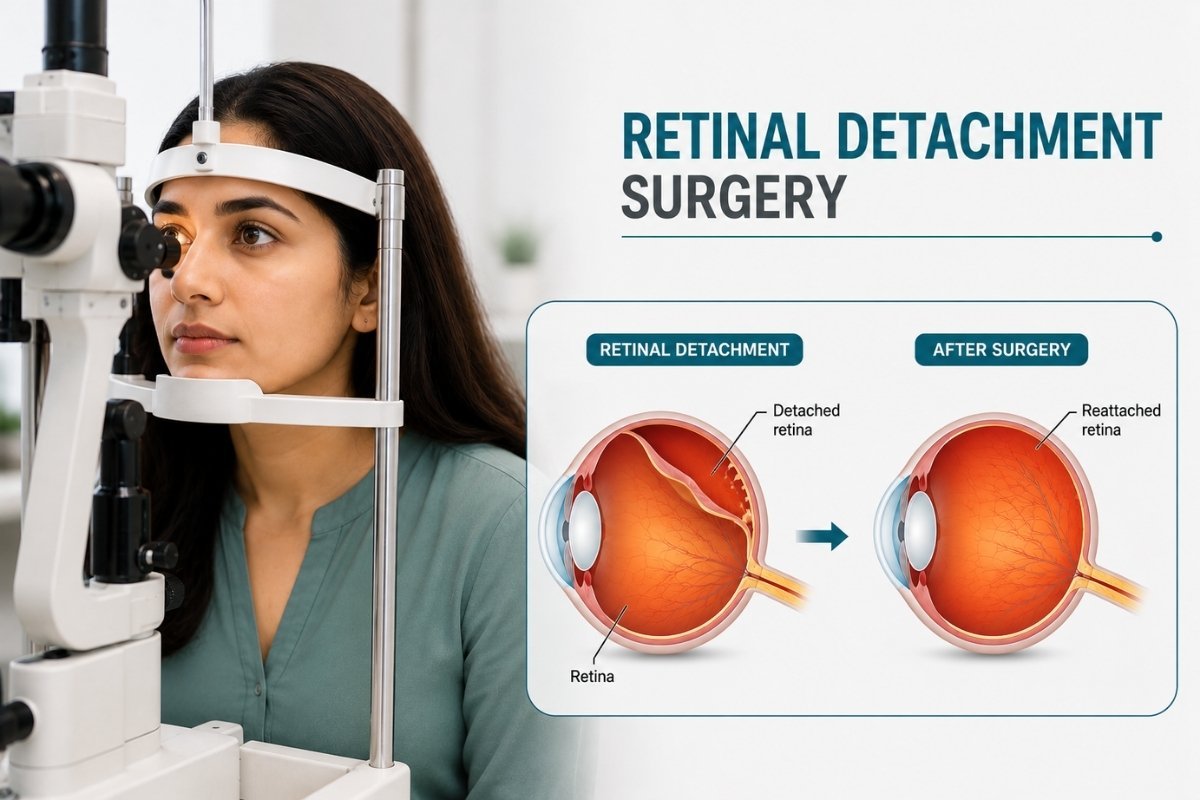
Retinal detachment is an eye emergency. The retina — the light-sensitive layer at the back of the eye — separates from its blood supply, and without that supply its cells begin to die. How quickly you are treated directly affects how much sight is saved. At Sama Hospital’s eye unit in South Delhi, retinal surgery is performed in-house by our vitreo-retina specialist.
Any of these needs assessment the same day. A detachment is painless in the great majority of cases — which is exactly why people wait, and why waiting costs sight. It does not improve with rest or drops.
Surgery is the only treatment, and the technique depends on the type and extent of detachment:
Laser or freezing treatment seals the underlying tear. Your surgeon will explain which approach suits your eye, and why.
Surgery is usually successful at reattaching the retina. Visual recovery is a separate question, and depends heavily on whether the macula — your central vision — had detached, and for how long. If the macula was still attached, the outlook is generally good. If it had detached, some permanent loss of central sharpness is common even after a technically perfect operation. We will give you a realistic expectation rather than a comforting one.
If a gas bubble is used, you may need to hold a specific head position for several days so it presses on the right part of the retina. It is demanding, but it matters. Vision stays blurred while the gas absorbs over some weeks. You must not fly or travel to high altitude while gas remains in the eye — the pressure change is dangerous. You’ll get clear written instructions before discharge.
What moves the figure: the surgical technique required, whether a gas or oil tamponade is used, and length of stay.
We quote an all-inclusive package once the surgery is planned, with cashless treatment available for eligible insurance patients. See our cost estimate page.
Doctor-owned, NABH-accredited, in South Delhi since 1982, with a vitreo-retina specialist on the team — so retinal emergencies are assessed and operated here rather than referred onward. If you have the warning signs above, call us today.
The retina separates from its blood supply and its cells begin to die, causing permanent vision loss in that area. Speed of treatment directly affects sight saved. It never resolves with rest or drops.
Sudden floaters, flashes of light, or a dark curtain across your vision — assess the same day. It is usually painless, which is why people wait, and waiting costs sight.
By surgery — vitrectomy, scleral buckling or pneumatic retinopexy, with laser or freezing to seal the tear. The choice depends on the type and extent of detachment.
Reattachment is usually successful, but visual recovery depends on whether the macula detached and for how long. Macula still attached: generally good outlook. Macula detached: some permanent central blur is common.
If gas is used you may need to hold a head position for days. Vision is blurred while gas absorbs over weeks. Do not fly or go to altitude while gas remains — it is dangerous.
MBBS, MD, DNB
MBBS, MD, DNB

MBBS, MD