
MBBS, MD, DNB

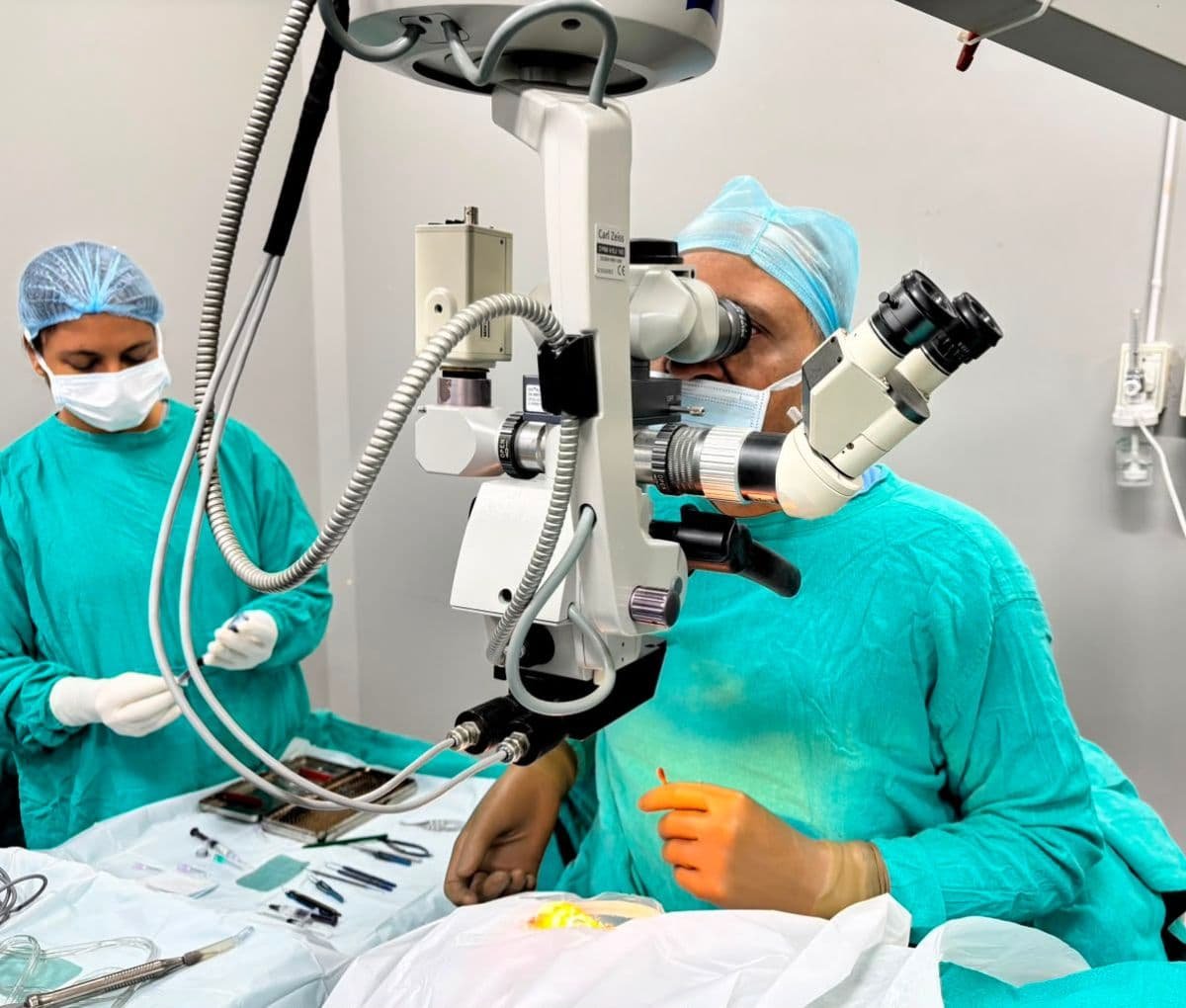
Cataract is the most common cause of treatable vision loss, and its surgery is one of the most successful operations in medicine. At Sama Hospital’s eye unit — a NABH-accredited, doctor-owned hospital in South Delhi — cataract removal with an intraocular lens implant is a day-care procedure under local anaesthesia, typically taking fifteen to twenty minutes.
The eye’s natural lens gradually turns cloudy with age, scattering light instead of focusing it. Vision becomes blurry, dim or glary — as though looking through a misted window.
The old advice to wait until a cataract is fully mature is outdated. The right time is when your vision interferes with everyday life — reading, driving, recognising faces. Waiting too long makes surgery technically harder, not easier.
Using phacoemulsification, the clouded lens is broken up and removed through a very small incision, and a clear artificial intraocular lens (IOL) is implanted in its place. The eye is numbed with drops or an injection, so the procedure isn’t painful, though you may notice light and mild pressure. You go home the same day.
There is no single best lens. The right choice depends on your eyes, your daily activities and your budget — and we will explain the trade-offs plainly rather than simply recommending the most expensive option.
Most people see more clearly within a day or two, with vision settling over a few weeks. You’ll use eye drops for several weeks and avoid rubbing the eye, swimming and dusty environments for a while. Final spectacles are usually prescribed around four to six weeks after surgery.
The lens you choose is the single biggest factor in the price. We’ve set out what drives the cost in detail on our cataract surgery cost page, including how insurance and cashless treatment work.
Doctor-owned, NABH-accredited, in South Delhi since 1982, with the eye surgeons named on this page — including a vitreo-retina specialist, so complications and retinal problems are handled in-house. We advise on lenses honestly, based on your eyes rather than on margin.
A clouding of the eye’s natural lens that develops with age. Operate when vision interferes with daily life — the old advice to wait for it to “ripen” is outdated and makes surgery harder.
Not painful — the eye is numbed with drops or an injection, though you may sense light and mild pressure. Typically fifteen to twenty minutes, as day care.
Monofocal gives excellent vision at one distance and suits most people; multifocal/EDOF reduces glasses dependence but can cause night glare; toric corrects astigmatism. There is no single best lens — it depends on your eyes, activities and budget.
Most notice clearer vision within a day or two, settling over a few weeks. Drops for several weeks; final spectacles around four to six weeks.
No — the natural lens is gone. But the membrane behind the implant can cloud months or years later; this is treated in minutes with a painless YAG laser in clinic, not further surgery.
MBBS, MD, DNB

MBBS, MD, DNB

MBBS, MD