
Urinary Retention Treatment in Delhi
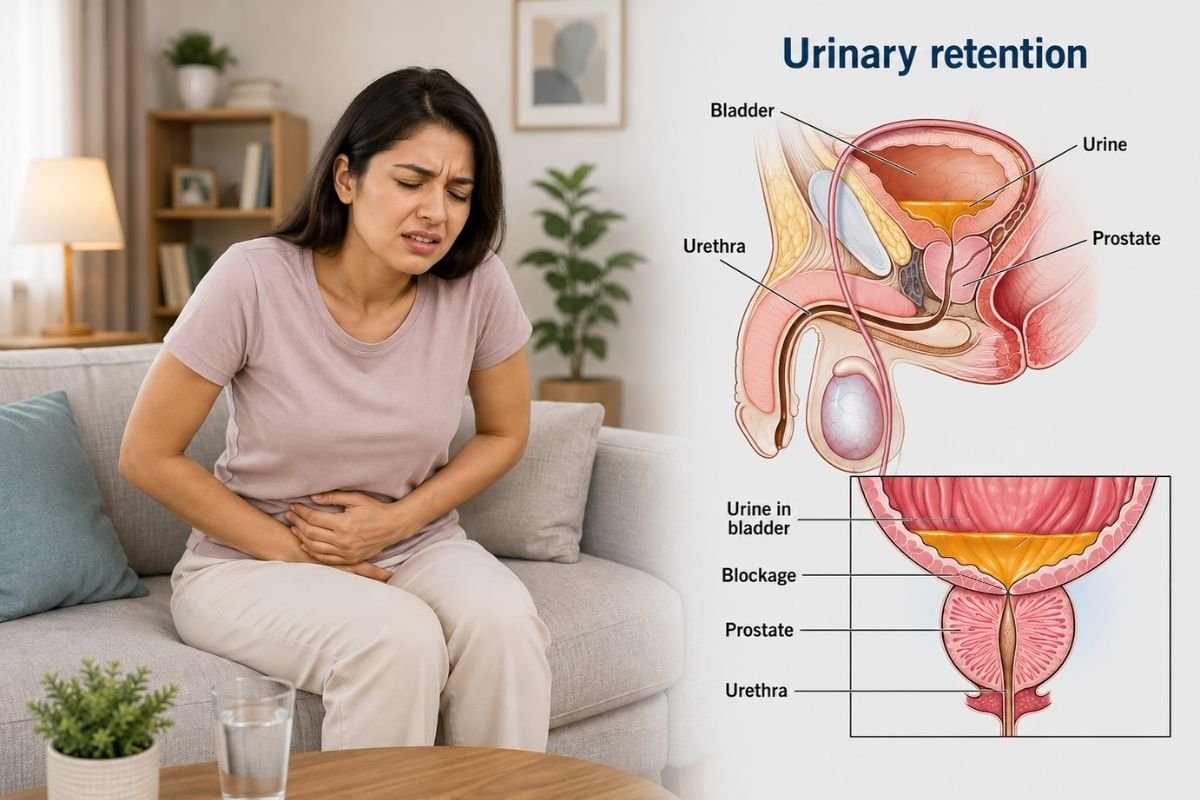
Most bladder problems are about leaking. Urinary retention is the opposite — the bladder does not empty properly. In women it is often missed, because it can be painless and show up instead as frequent trips to the toilet, repeated infections, or leakage. At Sama Hospital’s urogynaecology unit — a NABH-accredited, doctor-owned hospital in South Delhi — we find out why the bladder isn’t emptying and treat the cause.
Two Kinds of Retention
- Acute retention — a sudden, painful inability to pass urine at all. This is an emergency and needs prompt drainage for relief.
- Chronic retention — the bladder never fully empties and urine is left behind after every visit. This is often painless, which is exactly why it goes unnoticed.
Symptoms
- Difficulty starting to pass urine
- A weak or stop-start stream
- Feeling the bladder is still not empty afterwards
- Passing small amounts often, or getting up repeatedly at night
- Recurrent urine infections, or leakage from an overfull bladder
Why It Happens
The treatment follows from the cause, so finding it is the point of the assessment:
- A prolapse kinking or obstructing the outflow
- After-effects of pelvic or incontinence surgery
- Nerve-related causes — diabetes, spinal conditions
- Some medications, and severe constipation
How We Assess It
A simple bladder scan after you pass urine measures how much is left behind and confirms incomplete emptying — it is quick and painless. Examination for a prolapse, urine tests, and sometimes bladder-function (urodynamic) studies then identify the reason.
Treatment
Acute retention needs immediate catheter drainage, then treatment of the cause. For chronic retention the approach depends on why it is happening — repairing a prolapse, adjusting medication, treating constipation, or teaching clean intermittent self-catheterisation, which many women manage easily and which protects the kidneys while the underlying problem is addressed. Surgery is used only where the cause genuinely requires it.
Cost of Assessment in Delhi
What moves the figure: the investigations needed and the treatment the cause calls for. Much of the value here is in accurate diagnosis.
We quote an all-inclusive package once the cause is assessed and the treatment is confirmed, with cashless treatment available for eligible insurance patients. See our cost estimate page.
Why Choose Sama Hospital
Doctor-owned, NABH-accredited, in South Delhi since 1982, with a dedicated urogynaecology team named on this page. Retention in women is under-recognised; we take incomplete emptying seriously, find the reason, and treat it — rather than dismissing it.
Frequently Asked Questions
What is urinary retention in women?
The bladder does not empty properly. It can be acute (sudden, painful, an emergency) or chronic (the bladder never fully empties). Chronic retention in women is easy to miss because it can be painless.
What causes it?
A prolapse obstructing outflow, after-effects of pelvic surgery, nerve-related problems such as diabetes, some medications, or severe constipation. Identifying the cause guides treatment.
How is it diagnosed?
A simple bladder scan after voiding measures what is left behind. Examination, urine tests and sometimes urodynamic studies identify why it is happening.
How is it treated?
Acute retention needs immediate catheter drainage. Chronic retention is treated by cause — repairing a prolapse, adjusting medication, or teaching clean intermittent self-catheterisation. Surgery only where needed.
Is it dangerous?
Acute retention needs urgent attention. Long-standing chronic retention is prone to infection and can affect the kidneys over time, so it is worth assessing properly.

