
MBBS, MS, E.N.T.
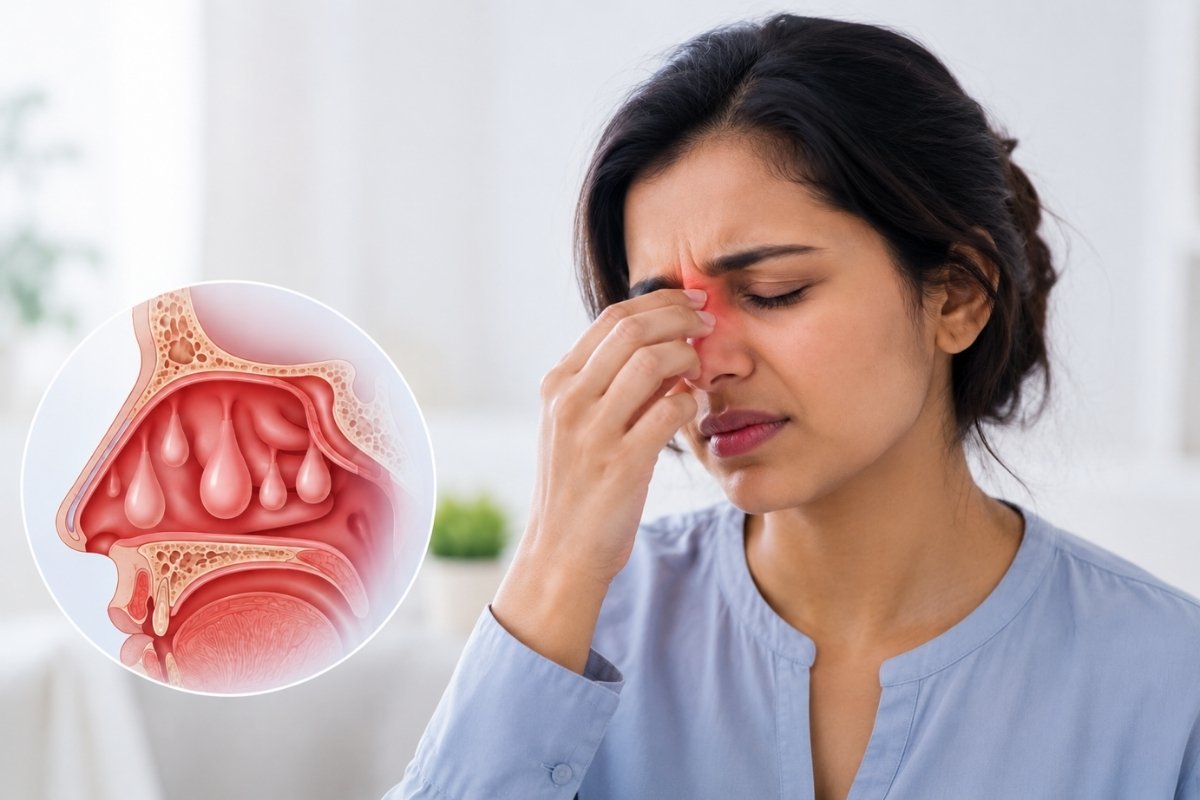
Nasal polyps are soft, painless swellings of the lining of the nose and sinuses. They block the nose, dull the sense of smell, and drive recurrent sinus infections. Many are controlled with sprays; when they are not, they are removed by keyhole endoscopic sinus surgery — through the nostrils, no external cut. At Sama Hospital — a NABH-accredited, doctor-owned hospital in South Delhi — it is day-care surgery.
They are grape-like swellings that grow from inflamed lining in the nose and sinuses — usually on both sides. They are strongly linked to allergy, asthma and long-standing sinus inflammation. They are not painful in themselves; the trouble they cause is blockage.
Most polyps are treated with medicine before any operation is considered. A steroid nasal spray, used properly and for long enough, shrinks many polyps and relieves symptoms. A short course of steroid tablets can help in a flare.
Surgery is for polyps that stay large and blocking despite proper medical treatment, or that keep causing infection.
Functional endoscopic sinus surgery is keyhole surgery done entirely through the nostrils with a fine telescope. The polyps are removed and the natural drainage channels of the sinuses are widened so they can clear themselves. No external incision, no change to the shape of the nose. Day-care or a single overnight stay, under general anaesthesia.
Surgery clears the polyps, but it does not cure the inflammation that grew them. Nasal polyps have a real tendency to come back — and the single most important thing that prevents this is continuing your steroid sprays and saltwater rinses after surgery.
We will be clear with you about this before you agree to an operation. Surgery is a reset, not a cure, and the after-care is not optional. Patients who stop their sprays are the ones who come back for repeat surgery.
Home the same day or the next morning. Expect congestion for the first week or two as the lining heals; regular saltwater rinses help. Most people are back to routine within a week, with smell and breathing improving over the following weeks.
What moves the figure: how extensive the disease is and how many sinuses are involved; whether a deviated septum is corrected at the same time; anaesthesia; and length of stay.
We quote an all-inclusive package, confirmed after clinical assessment, with cashless treatment available for eligible insurance patients. See our cost estimate page.
Doctor-owned, NABH-accredited, in South Delhi since 1982, with ENT surgeons named on this page. If sprays will control your polyps, that is what you will be offered first.
Often, yes — steroid sprays, and sometimes a short course of steroid tablets, shrink many polyps and are the usual first treatment. Surgery is for polyps that stay large and blocking despite medication.
They can, because surgery removes the polyps but not the underlying inflammation. Continuing steroid sprays and rinses after surgery is what keeps them from returning.
Often, yes — clearing the polyps restores airflow to the smell receptors. Recovery can be gradual and is not guaranteed to be complete, especially after long-standing loss.
It is keyhole surgery through the nostrils with no external cut, so pain is usually mild. The main discomfort is congestion for the first week.
The common polyps linked to allergy and inflammation are benign. But a growth on only one side, or one that bleeds, should always be examined — a small number of one-sided nasal growths are more serious.
MBBS, MS, E.N.T.

MBBS, MD, DNB, E.N.T.
MBBS, DNB, DOHNS (A), MNAMS