
Fracture Treatment & Fixation in Delhi
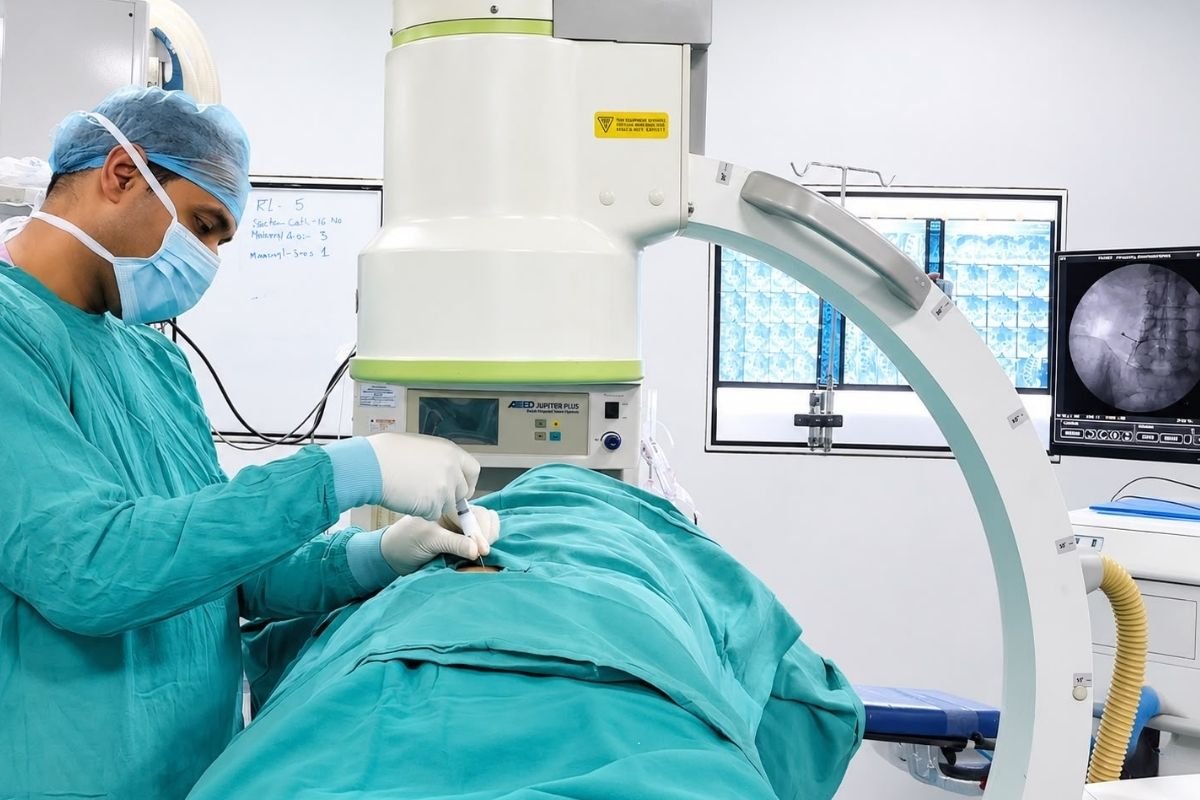
A fracture set correctly at the start heals far better than one that has to be broken again and reset later. Sama Hospital — a NABH-accredited, doctor-owned hospital in South Delhi — runs a round-the-clock orthopaedic trauma service, with an emergency theatre and nine orthopaedic consultants.
If you have an obvious deformity, cannot bear weight, have numbness or a cold, pale limb, or a wound over the break — come in today. Do not wait.
What Happens When a Bone Breaks
Bone is living tissue, and it heals itself. Our job is not to make it heal — it will do that. Our job is to put it back in the right position and hold it there while it does.
Everything else follows from that one idea.
Does It Need Surgery?
Often, no. A fracture that is stable and sitting in a good position will heal perfectly well in a plaster cast, and putting metal into it adds risk for no benefit.
Surgery is needed when:
- The bone is displaced and will not stay put in a cast
- The break runs into a joint surface — these must be reconstructed accurately or the joint will wear out early
- The bone is broken into several pieces
- Fixing it lets you move much sooner — which in an older patient can be the difference between recovering and not
How Fractures Are Fixed
Plaster cast — for stable, well-positioned fractures.
Plates and screws — the bone is exposed, restored to position and held with a metal plate.
Intramedullary nail — a rod passed down the hollow centre of a long bone, through small incisions. Strong, and lets you weight-bear early.
External fixator — a frame outside the limb, used in severe or contaminated injuries where internal metal would be unsafe.
Hip Fractures in the Elderly Are an Emergency
This deserves its own heading, because it is the single most important thing on this page.
An older person with a broken hip should be operated on quickly — ideally within 24 to 48 hours, where they are medically fit for it. This is not surgical impatience. Every day spent lying in bed brings a real risk of chest infection, pressure sores, blood clots and confusion, and those are what kill people after a hip fracture.
The surgery is not the danger. The immobility is. Families sometimes ask us to wait and see whether it settles. It does not settle.
Recovery
Most fractures unite in six to twelve weeks, depending on the bone and on you. Smoking and poorly controlled diabetes both slow bone healing measurably — this is not a lecture, it is a fact about your fracture.
Physiotherapy begins as soon as the fracture is stable enough. Bone heals; stiff joints and wasted muscle are what people are left with if rehabilitation is neglected.
Cost of Fracture Surgery in Delhi
What moves the figure: which bone and how badly broken; the implant used (plate, nail, or external fixator); whether the fracture is open or closed; emergency or planned; and length of stay.
We quote an all-inclusive package, confirmed after clinical assessment, with cashless treatment available for eligible insurance patients. See our cost estimate page.
Why Choose Sama Hospital
Doctor-owned, NABH-accredited, treating South Delhi since 1982, with an emergency theatre and nine orthopaedic consultants named on this page.
And if your fracture needs a cast rather than an operation, that is what you will get.
Frequently Asked Questions
Does every fracture need surgery?
No. Stable, well-positioned fractures heal well in a cast. Surgery is for displaced fractures, breaks into a joint surface, multi-fragment fractures, and cases where fixing it lets you move much sooner.
How long does a broken bone take to heal?
Usually six to twelve weeks to unite, depending on the bone and on you. Smoking and diabetes both slow it measurably. The bone keeps strengthening for months afterwards.
Will the metal need to come out?
Usually not — plates and screws are generally left in permanently. Removal is considered if the implant is prominent or painful, or in young patients, and is a separate planned procedure.
Is a hip fracture in an elderly person urgent?
Yes. It should be fixed or replaced within 24 to 48 hours where the patient is fit. The risk comes from lying in bed — chest infection, pressure sores, clots — not from the operation.
Should I come in or wait?
Come in. Obvious deformity, inability to bear weight, numbness, a cold pale limb, or a wound over the break all need seeing the same day.