
MBBS, DNB

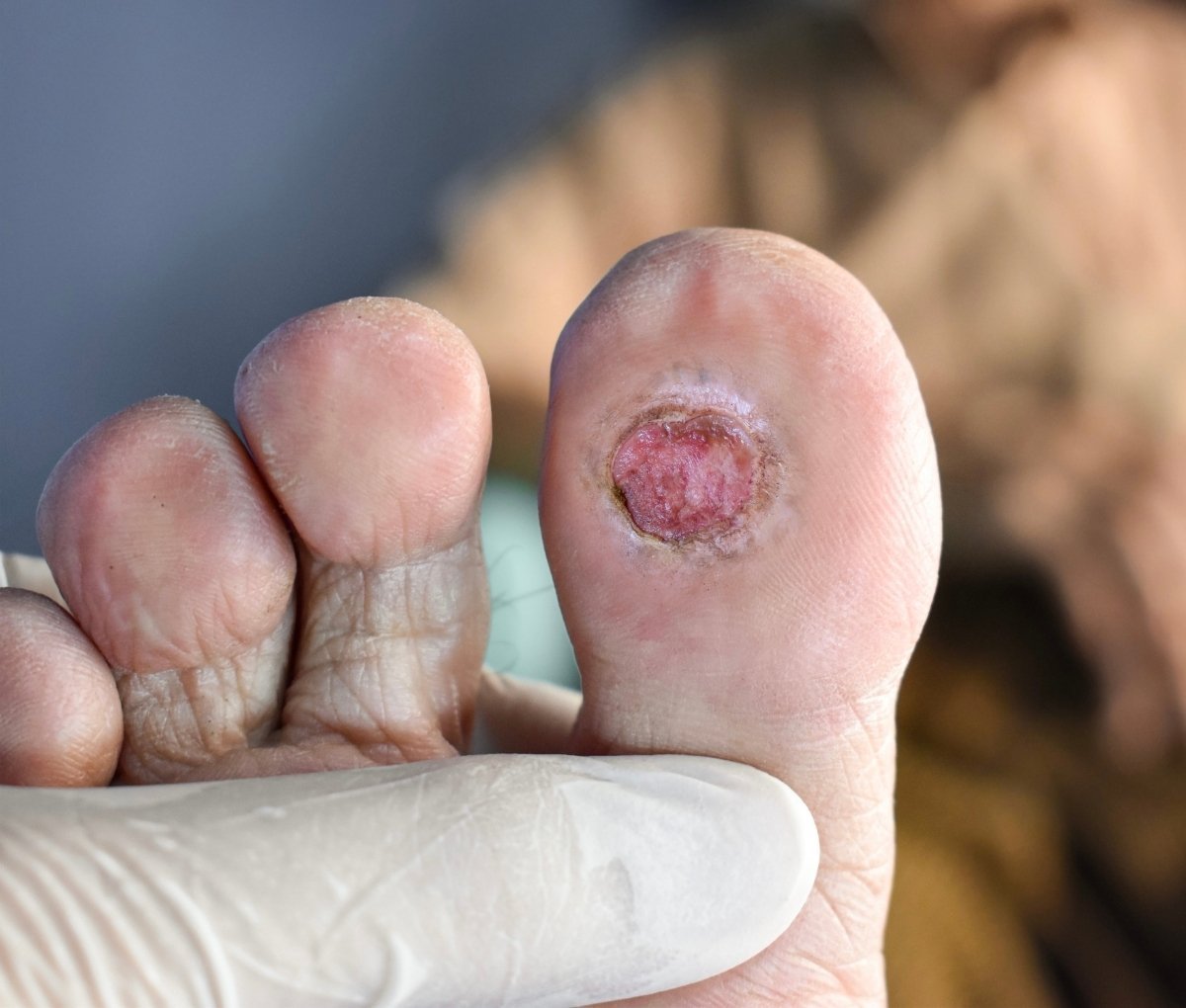
A diabetic foot ulcer is a wound on the foot that will not heal, and it is one of the most serious complications of diabetes — because it is the commonest path to amputation. It is also, with prompt and proper care, one of the most preventable. At Sama Hospital’s vascular unit — a NABH-accredited, doctor-owned hospital in South Delhi — we treat the wound and the circulation behind it, which is what actually saves limbs.
Diabetes damages the nerves, so an injury goes unnoticed, and narrows the arteries, so the foot gets less blood to heal with. A small cut then becomes an ulcer that won’t close. Treating the wound alone misses half the problem. The step that is too often skipped — and the one that makes the difference — is checking and restoring the blood supply to the foot.
Any of these needs to be seen early. A diabetic foot problem is not something to watch and wait on.
A diabetic foot ulcer can deteriorate quickly, and an untreated one is the most common route to losing a toe, foot or leg. The encouraging reality is the other side of the same fact: prompt, correct treatment prevents the large majority of amputations. Seen early, most limbs are saved.
Effective care brings several things together: cleaning and debriding the wound, controlling infection, taking pressure off the area, optimising blood sugar, and — crucially — restoring blood flow where the arteries are narrowed, which may involve an angioplasty or bypass. The vascular assessment of the circulation is what separates real diabetic-foot care from simply dressing a wound.
What moves the figure: the severity of the ulcer, whether infection or a circulation procedure is involved, and length of stay.
We quote an all-inclusive package once the treatment plan is confirmed after assessment, with cashless treatment available for eligible insurance patients. See our cost estimate page.
Doctor-owned, NABH-accredited, in South Delhi since 1982, with a dedicated vascular surgeon named on this page. We approach the diabetic foot as a circulation problem as much as a wound — which is what gives the best chance of saving the limb.
Diabetes damages the nerves (so injury goes unnoticed) and narrows the arteries (so the foot heals poorly). A small cut then becomes a non-healing ulcer. Treating the wound alone is not enough.
They can deteriorate quickly and are the commonest path to amputation. Prompt, proper treatment prevents the large majority of amputations, so an ulcer that isn’t healing should be seen early.
In most cases, yes, with early, correct treatment. The critical step is restoring blood supply if the arteries are narrowed, combined with wound care and infection control. It can’t be promised in every case, but timely care saves the great majority of limbs.
Wound cleaning and debridement, infection control, offloading pressure, blood-sugar control, and restoring blood flow if arteries are narrowed. The vascular assessment of circulation is the key part.
Check your feet daily, keep blood sugar controlled, wear well-fitting footwear, never walk barefoot, and have any wound looked at early. Daily inspection matters most, because reduced sensation hides problems.
MBBS, DNB