
MBBS, DNB
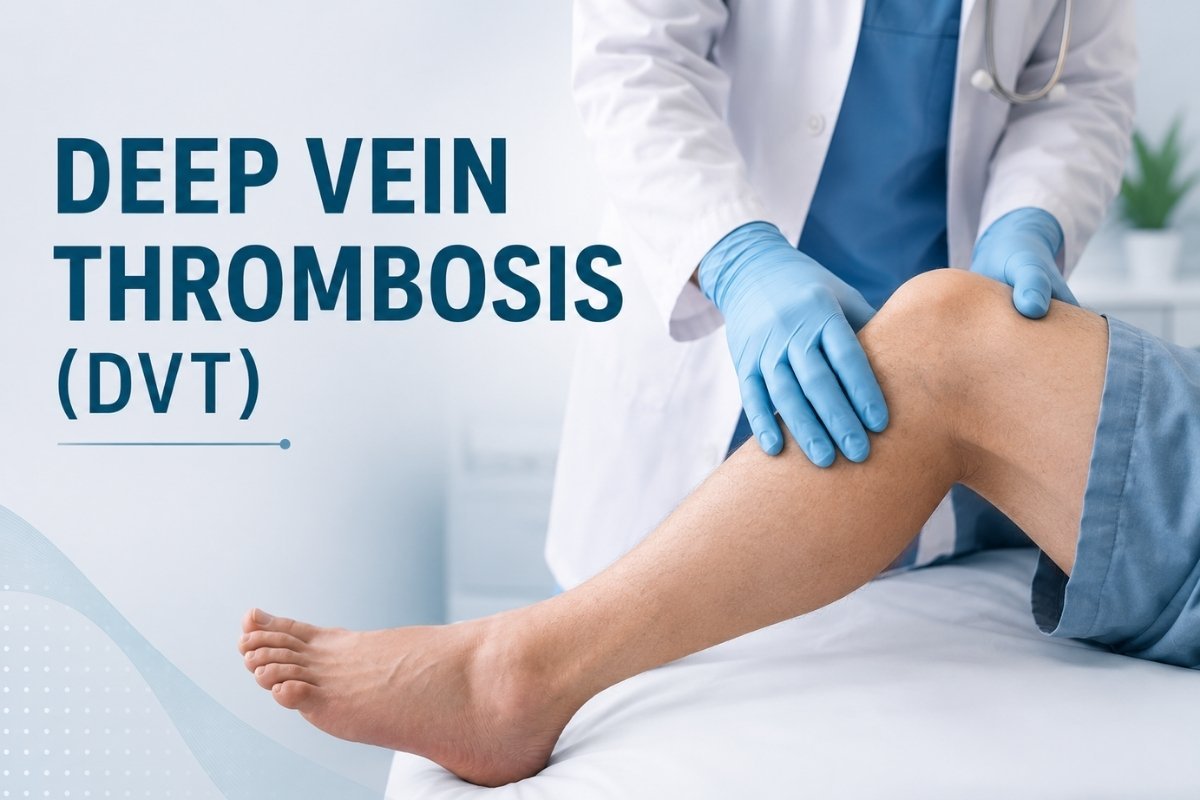
Deep vein thrombosis (DVT) is a blood clot in a deep vein, usually in the leg. It matters for two reasons: it can damage the leg long-term, and a piece of clot can travel to the lungs — a pulmonary embolism, which can be life-threatening. That makes a suspected DVT something to assess urgently, not to wait on. At Sama Hospital’s vascular unit — a NABH-accredited, doctor-owned hospital in South Delhi — we diagnose and treat it promptly.
Most of the danger of a DVT is not the leg itself but the risk that part of the clot breaks off and reaches the lungs. Caught and treated early, that risk drops sharply. This is why one-sided leg swelling, particularly after surgery, a long journey or a period of bed rest, should be checked quickly.
Knowing your risk factors matters, because a DVT is often preventable around these high-risk periods.
The mainstay is blood-thinning medication that stops the clot growing and prevents new ones while your body reabsorbs it, together with compression to control swelling. In selected severe cases we use procedures to remove or dissolve the clot, or a filter to catch clots before they reach the lungs. Most DVTs are managed well with medication rather than surgery.
What moves the figure: whether treatment is medication and monitoring alone or a clot-removal procedure, and length of stay.
We quote an all-inclusive package once the treatment plan is confirmed after assessment, with cashless treatment available for eligible insurance patients. See our cost estimate page.
Doctor-owned, NABH-accredited, in South Delhi since 1982, with a dedicated vascular surgeon named on this page. We treat DVT with the urgency it needs and the restraint it deserves — medication for most, procedures only where genuinely warranted.
A blood clot in a deep vein, usually the leg. It matters because it can damage the leg and because part of the clot can travel to the lungs (a pulmonary embolism), which can be life-threatening.
Swelling in one leg, calf or thigh pain, and warmth or redness. Sudden breathlessness or chest pain can mean a clot has reached the lungs and is an emergency. One-sided leg swelling should always be taken seriously.
Immobility (after surgery, long flights, bed rest), pregnancy, some cancers, certain medications, and inherited clotting tendencies. DVT is often preventable around high-risk periods.
Mainly blood-thinning medication that stops the clot growing, plus compression. Clot removal, clot-dissolving, or a filter are reserved for selected severe cases. Most DVTs need medication, not surgery.
Often, yes — moving and staying hydrated on long journeys, early mobilisation after surgery, and preventive blood thinners where advised. If you’ve had a DVT before, we’ll discuss lowering the risk of another.
MBBS, DNB