
MBBS, MS

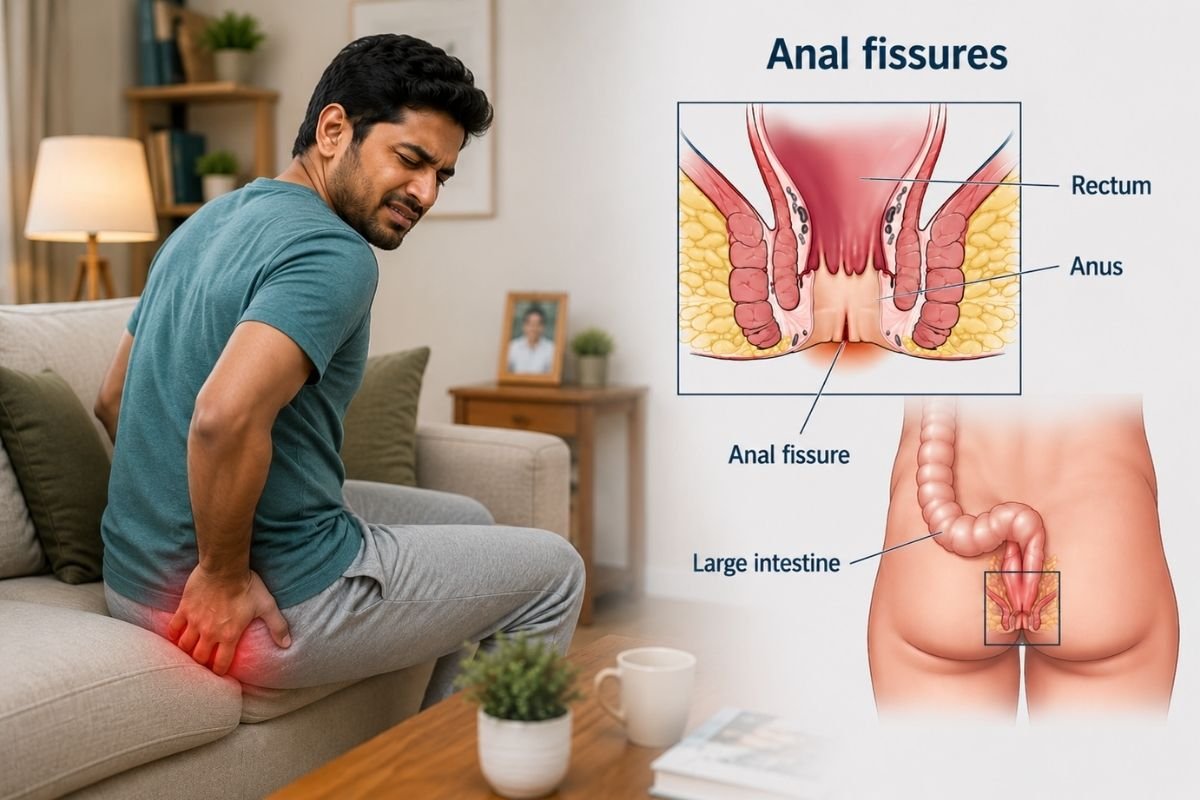
An anal fissure is a small tear in the lining of the anal canal. It is one of the most painful benign conditions in surgery — and one of the most treatable. At Sama Hospital — a NABH-accredited, doctor-owned hospital in South Delhi — most fissures heal without any surgery at all. When surgery is needed, we use a minimally invasive laser or conventional sphincterotomy, performed as day-care, and the pain relief is usually immediate.
A fissure is a tear in the delicate lining of the anal canal, usually caused by passing a hard or large stool. It is not an infection, and it is not piles — though it is very often mistaken for piles, because both cause bleeding.
The tear triggers spasm in the internal anal sphincter. That spasm squeezes shut the small blood vessels supplying the area, so the fissure is starved of the blood flow it needs to heal. It stays open, it keeps hurting, and the pain causes more spasm.
That vicious cycle — tear, spasm, poor blood supply, no healing — is the whole of the condition. Every effective treatment, from ointment to surgery, works by breaking it.
Most acute fissures heal with conservative treatment, and that is where we start:
Give this six to eight weeks. If a surgeon offers you an operation for an acute fissure before trying this properly, ask why.
Surgery is for chronic fissures — those that have not healed after adequate conservative treatment, or that keep coming back. By then the spasm is entrenched and no amount of ointment will break it.
Lateral internal sphincterotomy releases a small, carefully measured portion of the internal sphincter. The spasm goes, blood flow returns, and the fissure heals. It can be done with laser or conventionally; both work on the same principle, and laser allows a more precise release with less tissue trauma.
Day-care surgery under short anaesthesia. Most patients notice the pain is dramatically better almost immediately — because the spasm has been released — and return to routine within a day or two. The fissure itself heals over two to four weeks.
We quote an all-inclusive package, confirmed after clinical assessment. What moves the figure:
Cashless treatment is available for eligible insurance patients. See our cost estimate page.
Sama is doctor-owned and NABH-accredited, treating patients in South Delhi since 1982. Our surgeons are named on this page, and the surgeon you meet is the surgeon who operates.
Most fissures do not need an operation. We will tell you that, and treat you accordingly. A doctor-owned hospital has no revenue target pushing it toward the theatre.
Yes — most acute fissures do, with fibre, fluids, stool softeners, sitz baths and a topical ointment. Surgery is for chronic fissures that have not healed after six to eight weeks of proper treatment, or that keep returning.
The tear triggers spasm in the internal sphincter, which cuts blood flow to the area and prevents healing — which causes more pain and more spasm. Breaking that cycle is the aim of treatment.
A properly measured sphincterotomy releases only a small, controlled portion of the internal sphincter, and continence is preserved in the great majority of patients. The risk is not zero, and it rises if too much muscle is divided — which is why the extent of the release matters, and why it should be judged by an experienced surgeon.
Laser allows a precise, controlled release with less tissue trauma and typically a more comfortable recovery. The underlying principle is identical to conventional surgery.
Most patients notice a marked improvement almost immediately after surgery, because the spasm has been released. The fissure heals over the following two to four weeks.
MBBS, MS


M.B.B.S, M.S

MBBS, MS